Dust, Mercy, and the Beginning of Return
There are very few days in the liturgical year when the Church speaks so bluntly.
On Ash Wednesday, the faithful approach the altar and hear words that cut through illusion:
“Remember that you are dust, and to dust you shall return.”
or
“Repent, and believe in the Gospel.”
No softening.
No euphemisms.
No distractions.
Ash Wednesday is the doorway into Lent — and it begins with mortality.
What Is Ash Wednesday?
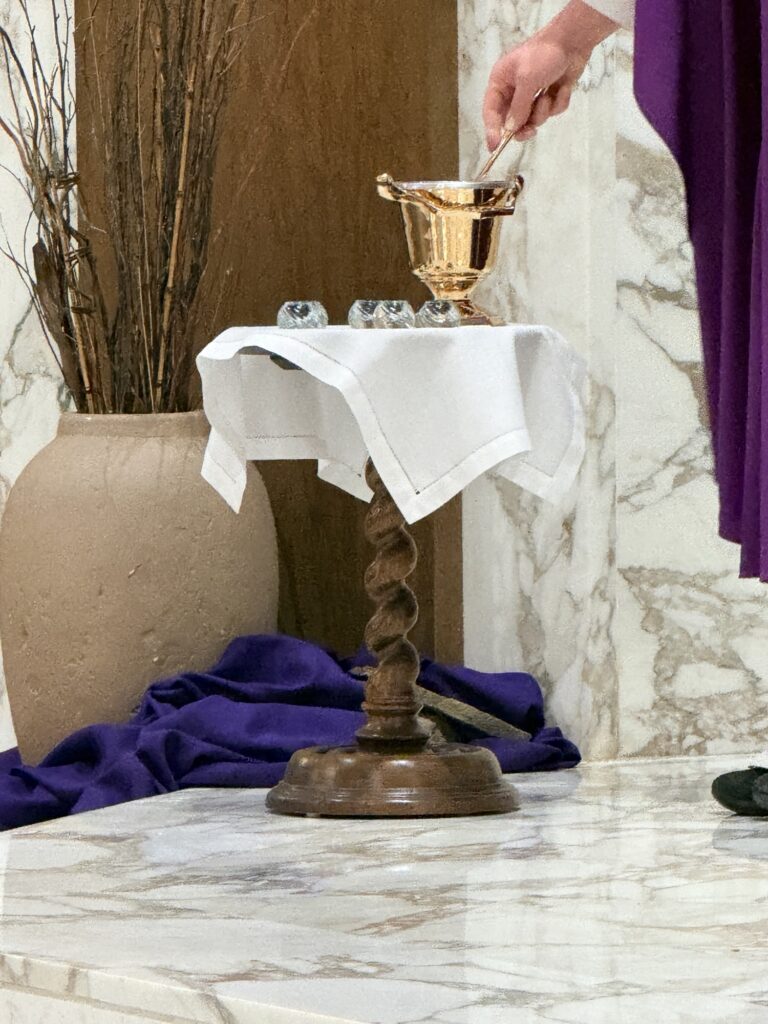
Ash Wednesday marks the beginning of the Church’s 40-day Lenten season, a time of repentance, fasting, prayer, and almsgiving that prepares us for Easter.
It is not a Holy Day of Obligation, yet it is one of the most attended liturgies of the year. Even Catholics who rarely appear at Mass will often stand in line for ashes.
Why?
Because something in the human soul recognizes truth when it hears it.
Ash Wednesday tells us what modern culture avoids at all costs:
You will die.
And somehow, strangely — this is good news.
Why Ashes?
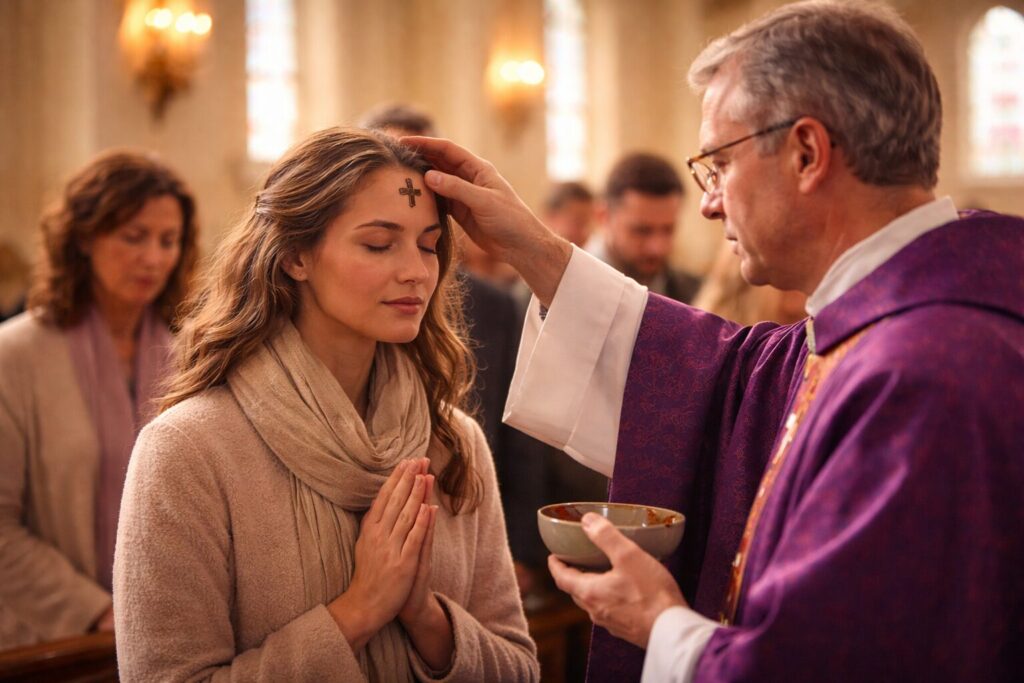
The ashes imposed on our foreheads are made from the burned palm branches of the previous year’s Palm Sunday.
This is not accidental symbolism.
The palms that once celebrated Christ as King are burned and returned to dust. The Church is teaching us something profound:
Worldly triumph fades.
Human praise is fleeting.
All earthly glory passes.
The ashes connect us to a long biblical tradition. In Scripture, ashes signify repentance, humility, and sorrow for sin.
In the Old Testament:
Job sits in ashes in repentance (Job 42:6). Daniel prays with fasting, sackcloth, and ashes (Daniel 9:3). The people of Nineveh cover themselves in ashes when they turn back to God (Jonah 3:6).
Ashes are not decorative. They are a public acknowledgment:
“I need mercy.”
“Remember You Are Dust”
The first formula spoken during the imposition of ashes comes from Genesis:
“For dust thou art, and into dust thou shalt return.” (Genesis 3:19)
These words were first spoken after the Fall.
Death entered the world because of sin. Ash Wednesday does not pretend otherwise. It reminds us that sin has consequences — not abstract ones, but physical ones.
Yet the Church does not proclaim this in despair.
She proclaims it in hope.
Because Christ has entered death.
We are dust — yes.
But we are dust loved by God.
Dust redeemed by the Cross.
Dust destined for resurrection.
Ash Wednesday confronts mortality so that we may long for eternity.
“Repent and Believe in the Gospel”
The second formula echoes the words of Christ Himself at the beginning of His public ministry:
“Repent, and believe in the gospel.” (Mark 1:15)
Repentance is not self-hatred. It is clarity.
To repent means to turn — to reorient the will toward God. It is not merely feeling bad. It is choosing differently.
Ash Wednesday is not about vague regret. It is about decision.
What must be uprooted?
Where have I compromised?
What habits have quietly hardened into sin?
Where has my love grown cold?
The Church does not leave these questions hanging in the air. She gives us Lent to answer them.
The Discipline of the Day
Ash Wednesday is a day of both fasting and abstinence for Catholics.
Fasting (for those ages 18–59) means one full meal and two smaller meals that together do not equal another full meal.
Abstinence (for those 14 and older) means no meat.
These practices are not arbitrary. They train the body to submit to the soul. They remind us that desire does not rule us.
The modern world teaches constant indulgence. Ash Wednesday begins with restraint.
And restraint clarifies love.
Why Public Ashes?
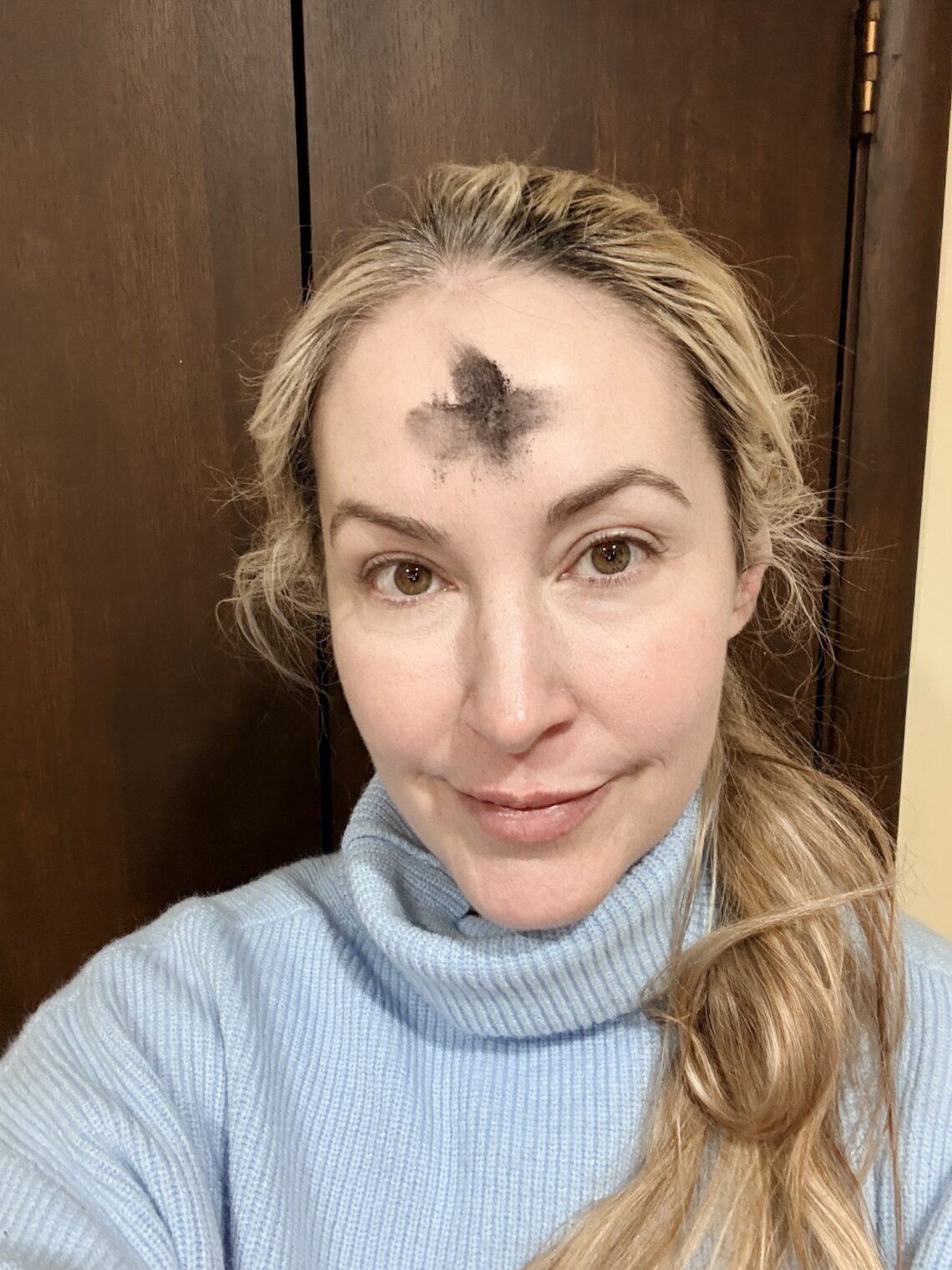
It is striking that the Church marks our foreheads — visibly.
We carry the cross of ashes into grocery stores, offices, schools, and sidewalks. For a day, we are marked.
This public witness is quiet but powerful.
It says:
I am mortal. I am a sinner. I belong to Christ. I am beginning again.
There is humility in being seen this way. Ash Wednesday dissolves the illusion of control. It levels us. Wealth, status, beauty, accomplishment — none of it survives the dust.
And yet, beneath the ashes is the sign of the Cross.
Death and redemption in one gesture.
Ash Wednesday and Spiritual Warfare
Ash Wednesday is also a declaration of battle.
The moment Christ entered the desert for 40 days, He faced temptation. The Church follows Him there.
Lent is not passive reflection. It is active resistance. We fast to weaken disordered attachments. We pray to strengthen our communion with God. We give alms to loosen greed.
Ash Wednesday is not the beginning of a self-improvement project. It is the beginning of spiritual combat.
But the Church does not send us into battle alone.
The Cross marks us first.
The Mercy Beneath the Dust
If Ash Wednesday were only about death, it would crush us.
But it is not.
It is about mercy.
The ashes are placed in the shape of the Cross. The symbol of execution becomes the sign of salvation.
This is the logic of Christianity:
Death becomes life.
Dust becomes glory.
Repentance becomes freedom.
Ash Wednesday is not God saying, “You failed.”
It is God saying, “Come back.”
Why It Matters
In a culture obsessed with youth, achievement, and image, Ash Wednesday quietly dismantles illusion.
You are not self-created.
You are not immortal.
You are not autonomous.
You are dust — and infinitely loved.
The Church, in her wisdom, gives us this day every year because we forget.
We drift.
We become spiritually comfortable.
We grow numb.
Ash Wednesday interrupts that numbness.
It wakes us.
The Invitation
The ashes fade by evening. They wash off. They smudge. They disappear.
But the invitation remains.
Return.
Not dramatically.
Not performatively.
Not anxiously.
Simply return.
Because beneath the dust is a God who never stopped waiting.
God bless